
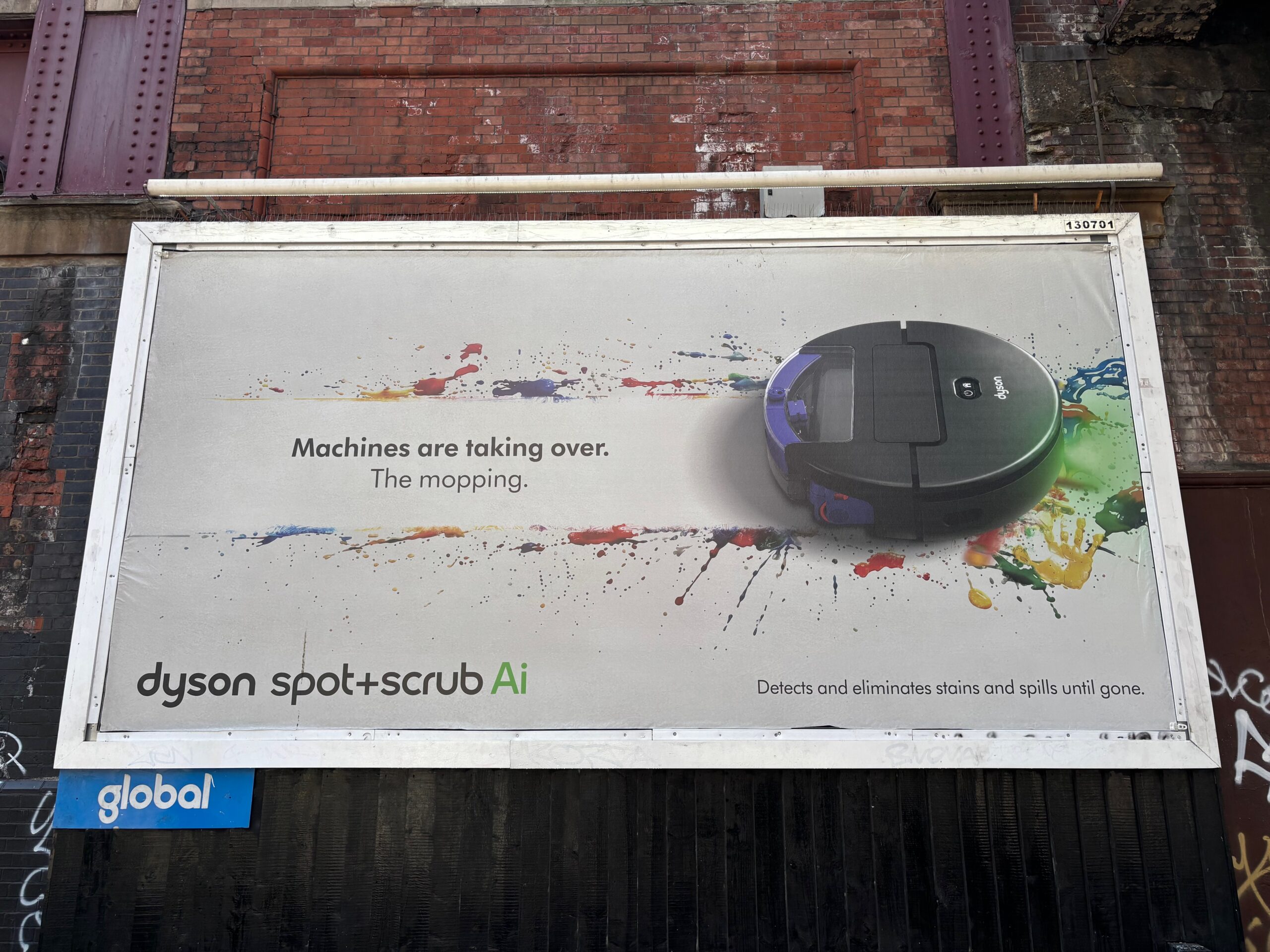
I was out on a lunchtime walk, sweltering in the toasty 35C heat (a disconcerting trend set for another blog), when I spotted a new campaign by Dyson splashed across some billboards to promote its spot+scrub Ai product.
Machines are taking over. The mopping.
This robot will steal your jobs. And you’ll be delighted.
This robot will steal your jobs. Wonderful.
No job is safe from automation. Not even this morning’s matcha.
Each poster is accompanied with a tagline saying: “Detects and eliminates stains and spills until gone.”
The ads immediately caught my attention. But why? And what can B2B tech PR take from this B2C campaign?
Understanding consumer sentiment
AI and jobs is a contentious topic right now, and rightly so. What this Dyson campaign does is tap into this sentiment but then juxtaposes it with either a banal (to many people) task, which many would see happily taken off their hands, or a positive emotion. These are household chores, activities sci-fi has romanticised about being done on humans’ behalf.
Notably, there can be certain big tech leaders who are out of touch with the reality of how people are feeling (such as high-profile tech execs getting booed by graduates). To grab attention, some also feel a need to present doomsday scenarios or employ elements of chicanery, tactics that only lead to eroding trust and their reputation.
So, rather than being blind to consumer fears, acknowledging them and then reframing them into a positive outcome is a shrewd way of hitting the mark.

Trends and timing
What B2B comms can take from B2C in particular is relating corporate messaging to wider consumer movements. One of the posters, for example, links AI, automation and the current matcha craze in a sentence. Tech companies have to be able to connect what they do to real-world issues and trends – a PR function does this and then ties it to the news agenda.
What’s more, it might have been a pure fluke, but in such searing heat the idea of an automated mopper or robot doing the chores for you becomes all the more appealing. It’s a reminder that when such conditions or trends arise, B2B tech PR teams should latch on to them for news, article or comment opportunities. Timing can make all the difference as to whether a story lands.

Framing the messaging with clarity
I’m sure, of course, there will be ardent household cleaners who still wish to do their chores. And so they should. But the framing of the Dyson messaging focuses on the tasks people actually wish to automate rather than displacing jobs as a whole. This specificity is crucial. If this was in a B2B context, it would imply that the technology simply elevates the work of an employee over replacing them.
The PR skill is being able to articulate what tech companies can deliver for businesses/employees in both a clear and captivating manner. There are levels to how much explanation and detail is needed, which vary on a case-by-base basis. Readers of sector-specific publications will likely be able to infer context and don’t need as much terminology spelling out. Pieces in national publications, on the other hand, cater to a far broader readership.
You never know who will come across a story, however, and, if in doubt, it’s better to explain concepts for a wider audience. Relatable analogies, for instance, are always a powerful way of illustrating an idea. Business leaders are of course also consumers – like all of us – and so there’s a line to walk between sector-specific and wide-hitting messaging.
Whether Dyson’s robotic mops take over is a whole other story. But the messaging and timing of its B2C campaign is a smart example for how tech companies can communicate their services or products to other businesses.
Related Articles